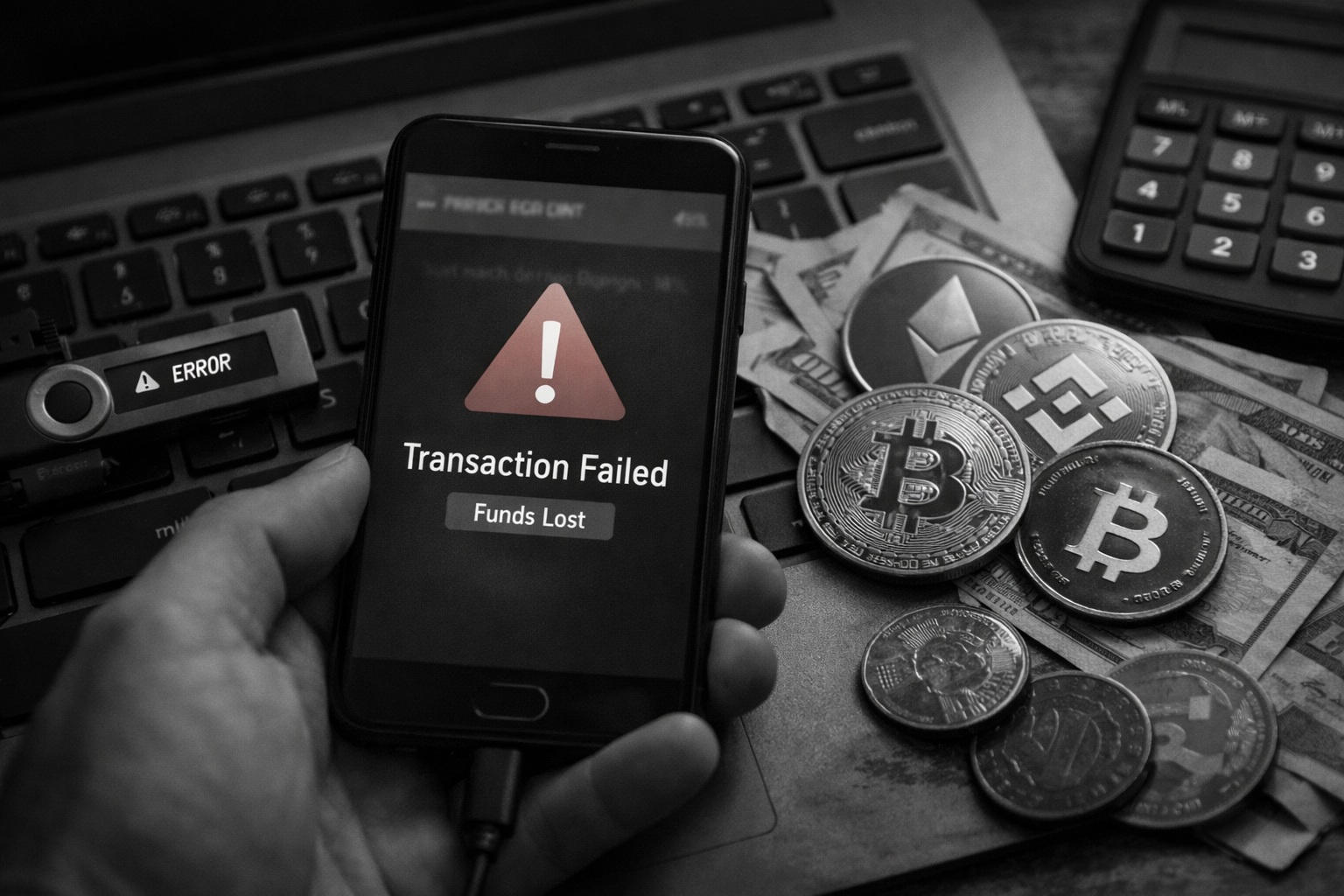
Nobody in crypto likes admitting their mistakes, but almost everyone has made at least one of these. They’re not exotic failures; they’re basic errors that happen because people rush, get overconfident, or skip steps they think don’t matter. Each one costs real money, and each one is avoidable.
- Sending to the Wrong Address or Wrong Network
This is the most expensive mistake in crypto, and it happens more often than you’d think. A single wrong character in a wallet address means your funds are gone forever. Sending tokens on Ethereum to a wallet that only supports BSC means your tokens are stuck or lost.


The fix is boring but effective: always copy and paste addresses (never type them manually), verify the first and last few characters after pasting, and confirm the network before hitting send. For large amounts, send a small test transaction first. Every single time.
- Ignoring Gas Fees and Network Costs
People see a great exchange rate and forget to factor in the cost of actually moving the crypto. Swapping $200 of tokens on Ethereum during peak congestion could eat $30–50 in gas fees, wiping out any rate advantage. Before committing to a swap, calculate the total cost, including network fees on both the sending and receiving sides. Sometimes waiting a few hours for congestion to drop saves you more than shopping for a better rate.
- Leaving Crypto on Exchanges Longer Than Necessary
Every day your crypto sits on a custodial exchange is a day of unnecessary risk. Swap, withdraw, move on. Many non-KYC exchange sites don’t hold your funds at all, as the swap goes directly to your wallet, which removes the temptation to leave money sitting somewhere it doesn’t need to be.
- Not Checking the Actual Rate Before Confirming
Exchange rates are not universal. The rate on one platform can differ meaningfully from that on another, especially for less-liquid trading pairs. Some platforms bury fees inside the spread, showing you a “zero fee” exchange that actually gives you 2–3% less than the mid-market rate. Before confirming any swap, compare the rate you’re being offered against the current market rate on a neutral source like CoinGecko. If there’s a gap larger than 1–1.5%, you’re probably overpaying.
- Swapping Everything at Once During Volatile Markets
If you need to convert a large amount of crypto, doing it all in a single transaction during a volatile period exposes you to maximum slippage risk. Splitting a large swap into two or three smaller transactions spreads the risk. You might get a slightly worse rate on one batch and a slightly better rate on another, but you avoid the worst-case scenario of catching the market at exactly the wrong moment.
Quick Reference
| Wrong address/network | Total loss of funds | Copy-paste, verify, test tx |
| Ignoring gas fees | $10–$50+ per swap | Calculate the total cost first |
| Funds left on the exchange | Counterparty risk | Use non-custodial swaps |
| Not checking the rate | 1–3% hidden fee | Compare to CoinGecko |
| All-at-once swaps | Max slippage exposure | Split into 2–3 batches |
None of these mistakes requires deep technical knowledge to avoid. They require patience and a simple checklist. The people who follow these basic steps consistently are the ones who stop losing money to avoidable errors.
If you’re looking for a platform that keeps things transparent, clear rates, no custody of your funds, and no hidden fees, Paysmaker is built around exactly that approach. But regardless of which platform you use, the checklist above will save you money.