Every day, billions of people create enormous amounts of value. They post on social media.They watch videos. They share content. They generate data. They participate in digital ecosystems. Collectively, these activities generate trillions of dollars in economic value. Yet most people receive very little in return. The modern internet has been built around a simple model. Users create value. Platforms capture value. This model produced some of the largest companies in history. Facebook. Google. YouTube. Instagram. TikTok.
Billions of users contributed content, attention, and engagement. The platforms became worth hundreds of billions of dollars. The users remained users. This dynamic is one of the most important economic realities of the digital age. Most people participate in networks. Very few people own them. Blockchain technology introduced a revolutionary alternative. Ownership could become distributed. Networks could be governed by communities. Participants could become stakeholders. The distinction between user and owner could begin to disappear. This idea sits at the heart of NetFi Infinity.


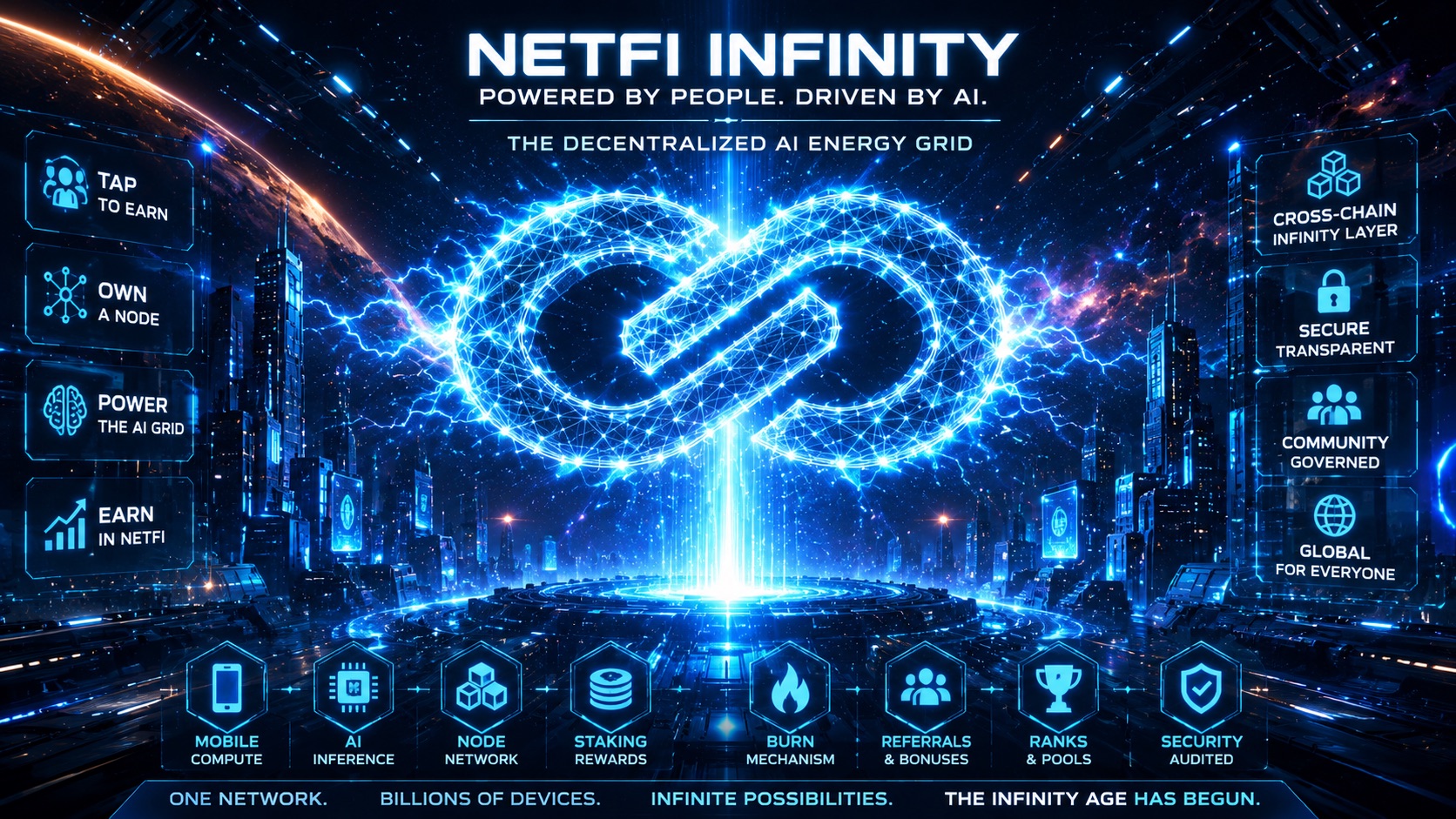
The project is designed around a simple but powerful principle: The future digital economy should reward participation with ownership opportunities. Instead of merely consuming technology, individuals should have pathways to become active participants in the growth of technological ecosystems. This philosophy becomes increasingly important as artificial intelligence continues to transform society.
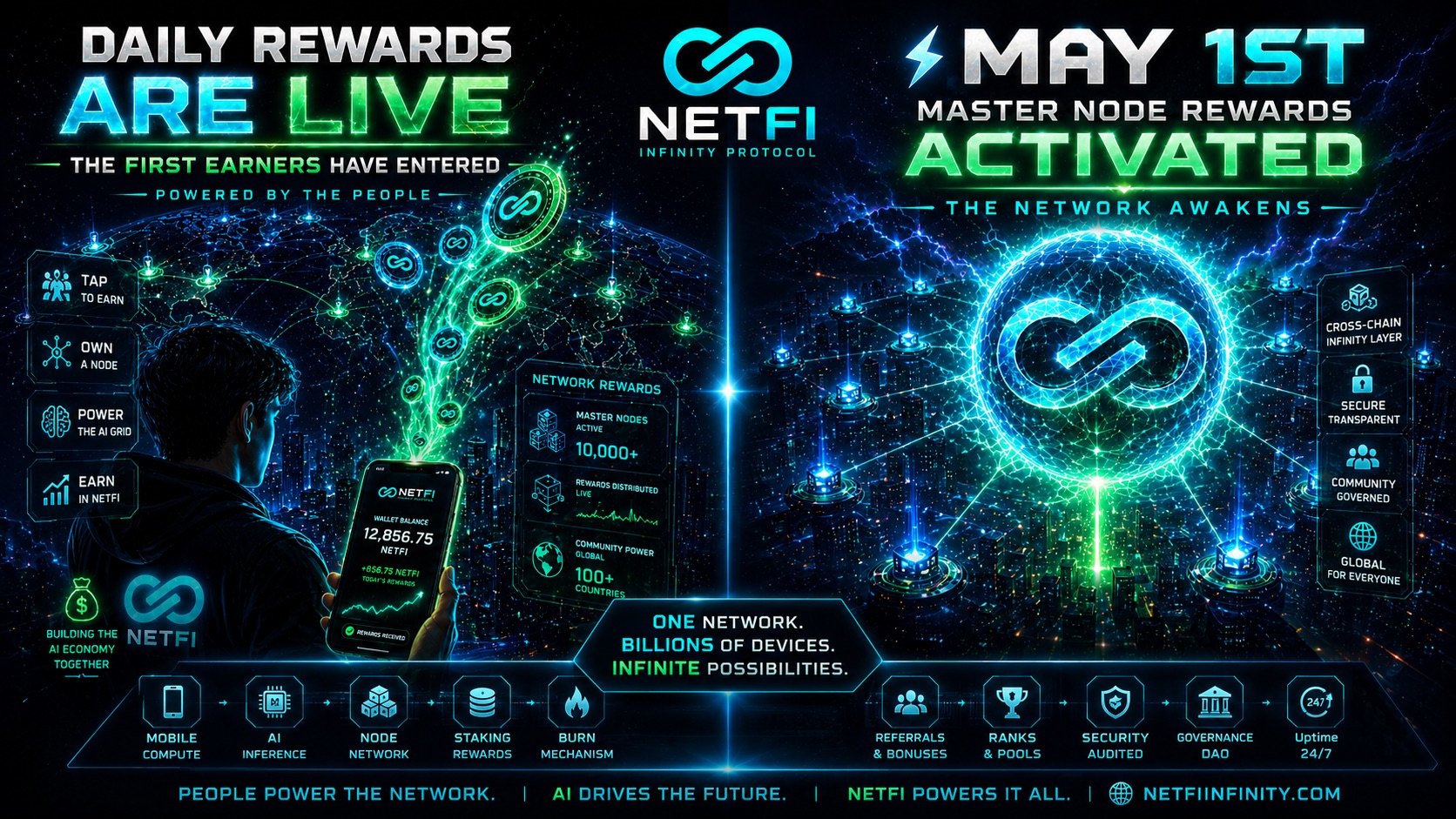
AI systems require infrastructure. They require networks. They require communities. They require participation. The question becomes whether the benefits generated by these systems will flow exclusively to centralized corporations or whether communities can share in the value they help create. NetFi Infinity seeks to explore the second possibility. Through its ecosystem, participants can engage through node ownership, staking, community growth mechanisms, Tap-to-Earn participation, governance systems, and future infrastructure initiatives.
This creates a fundamentally different relationship between the individual and the network.In traditional systems: You use the platform. In decentralized systems: You can become part of the platform. This distinction may seem subtle. In reality, it changes everything. Ownership changes incentives. Owners think long term. Owners contribute. Owners help grow networks.
Owners care about sustainability. Owners build communities. This is one of the reasons why decentralized networks have become such a powerful force in modern finance and technology.
When people have ownership, they behave differently. Bitcoin demonstrated this phenomenon. Ethereum expanded it. The next generation of decentralized ecosystems may apply the same principles to AI infrastructure. NetFi’s long-term vision includes a future where decentralized intelligence networks allow broader participation in the AI economy.
The timing of this vision is particularly important. Artificial intelligence is rapidly becoming one of the defining technologies of our era. Entire industries are being transformed. Business models are evolving. Economic systems are adapting.
The value created by AI could reach trillions of dollars. Historically, those who positioned themselves around emerging infrastructure benefited the most from technological revolutions. The internet created opportunities for platform owners. Cloud computing created opportunities for infrastructure providers. Blockchain created opportunities for network participants. Artificial intelligence may create opportunities for decentralized infrastructure owners.
NetFi Infinity seeks to position its community within that trend. The future economy will not simply reward those who use technology. It may increasingly reward those who help build, support, and own it. The transition from user to owner may become one of the most significant economic shifts of the twenty-first century. The communities that understand this transition early may gain a significant advantage. Because in every major technological revolution, one truth remains constant: Consumers spend money. Owners build wealth.